Treatment Comparisons
Every page in this section is a spreadsheet with two columns of treatments and the same five rows down the side. I didn't plan it that way. It's just what happened after the fourth friend asked me which of two things to book, and I noticed I kept filling in identical boxes.
So here are the rows first, because once you've got them you can run the exercise on any pair, including ones I haven't written up.
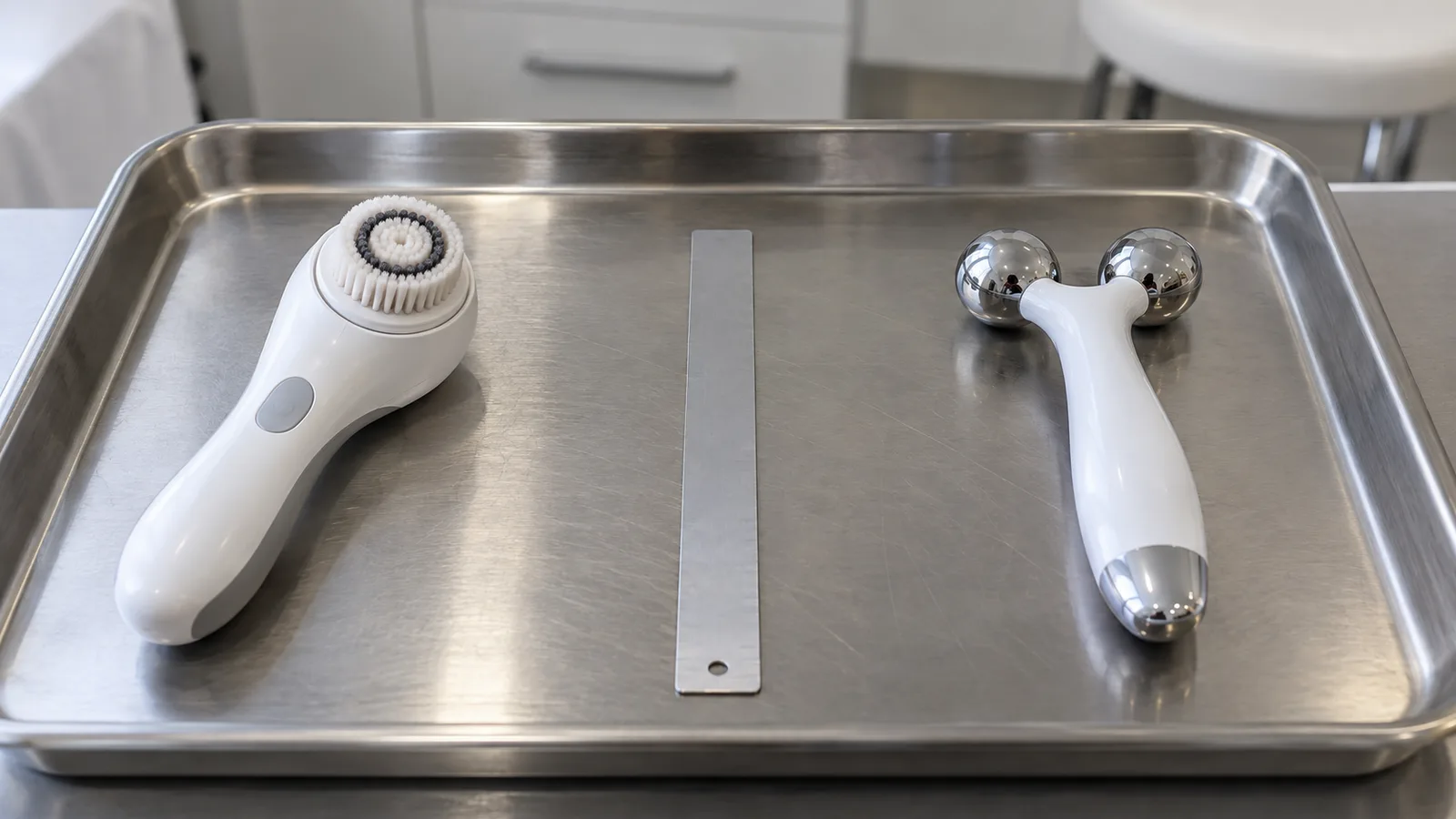
The five rows I fill in for every pair
Unit. What exactly is the price attached to? A unit of product, a syringe, a vial, a session. If the two sides of a pair are priced in different units, nothing else on the sheet means anything until you convert them.
Course. How many visits does one result take? A single appointment and a series of four can carry similar sticker prices and wildly different totals.
Clock. How long until you see anything, and how long does it hold? Some treatments show up the same week. Others ask you to wait months and trust the process.
Undo. If you don't like it, what's the correction? Some options can be adjusted or dissolved. Others you simply wait out.
Recovery. How many days does your face look like it's had something done? This row decides more bookings than the price row, in my experience, and it gets asked about last.
The three pairs filed here
- Botox vs Dysport: Which Is Cheaper? is the pair where the unit row does all the work. The two brands are dosed on different scales, so a per-unit comparison is close to meaningless.
- Filler vs Biostimulator splits hardest on the clock and undo rows. One is visible almost straight away and can be dissolved; the other builds slowly and can't be taken back out.
- Microneedling vs RF Microneedling is mostly a course-and-recovery question. The premium version often needs fewer sessions and a rougher few days afterwards.
When the rows come out even
It happens more than you'd expect. You fill in both columns honestly, convert to cost per month of effect, and the gap is small enough to ignore.
That isn't a failed comparison. It's the result. When the money ties, the decision passes to the rows that aren't money, usually the clock and recovery, and to how comfortable the person examining your face was explaining why they'd pick one side over the other. A good consultation answers that in plain words. A vague one tells you something too.
What these pages can't settle
None of them can tell you which side suits your skin. They lay out the trade-offs; someone qualified has to look at you in person and decide which trade-off fits.
They also say nothing about which practice to use. If you want to confirm a place is established before you travel to it, member listings from the North Jersey Chamber of Commerce and the Home - Hudson County Chamber of Commerce will answer that much. Existence and reachability, nothing more. Clinical judgement isn't something a directory can list.
Where to start
Pick the pair you're actually stuck on and print the five rows. Take the sheet to two consultations and fill in both columns from what each place tells you, in ink, before you leave the building. Then do the division at home, where nobody is waiting on your answer.
Once the printed sheet has both columns filled, one practice worth adding when you're comparing treatments in Hoboken is a short ride south of the hill.