Botox vs Dysport: Which Is Cheaper?
The per-unit price is the wrong number. That's the entire answer, and if you take nothing else from this page, take that.
Both products are botulinum toxin type A. Both relax the muscle that's creasing the skin above it. They are close cousins, and for most people either one will do the job. Where they differ, in a way that wrecks naive price comparisons, is that a unit of one is not the same quantity of anything as a unit of the other.
Why the units don't line up
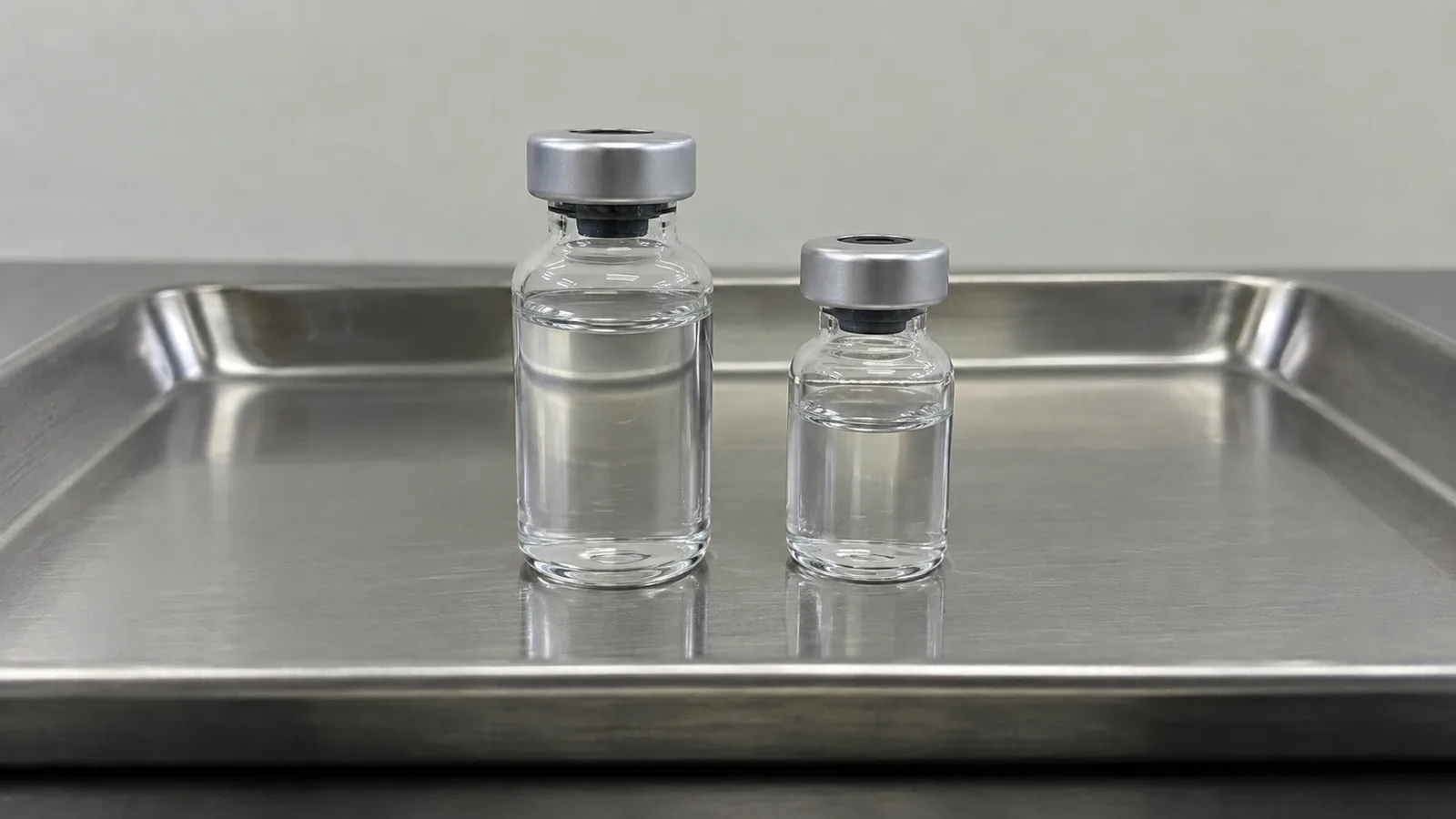
Each brand measures its dose on its own scale. The scales were set by the manufacturers, independently, and there was never any reason for them to match.
The practical consequence is a conversion factor. The figure most commonly cited is somewhere around two and a half to three units of Dysport for every one unit of Botox, and you'll see practices use slightly different numbers within that range depending on how they were trained and what they've seen in their own patients.
So a Dysport unit priced at well under half a Botox unit is not a bargain. It's roughly the same money arriving in different packaging. Sometimes it works out a little cheaper, sometimes a little dearer, and the direction depends entirely on where a particular practice has set both prices rather than on anything inherent to the products.
The comparison that actually works
Ask for the price of treating the area, not the price of a unit.
"What would you charge to treat my forehead lines with Botox, and what would you charge to treat the same area with Dysport?" Two numbers, same denominator, immediately comparable. Any practice that treats both will have those figures to hand.
Then extend it across the interval. Ask roughly how long each one tends to last in that area, take the conservative end of whatever range you're given, and work out the cost per month of effect. That's the number that decides it, and it's frequently a smaller difference than the per-unit prices imply.
Do that arithmetic before you're sitting in the chair. It takes two minutes on paper and it's nearly impossible to do reliably in your head while someone waits.
Where they genuinely differ
Setting price aside, there are real differences, and they matter for the choice even though they rarely decide it on cost.
Spread. Dysport is generally described as diffusing a little more widely from the injection point. For a broad area like the forehead some injectors consider that useful; for small, precise work others prefer the tighter behaviour of Botox. This is a placement judgement, and it belongs to the person holding the needle rather than to you.
Onset. Dysport is often reported to start showing up slightly sooner. That's a difference of a day or two, not a week, and individual variation swamps it. If you've got an event in ten days, neither one is a plan.
Duration. Broadly comparable, with wide individual variation. Your metabolism, the dose, the muscle and how much you use it all matter more than the brand. Anybody who hands you one confident number for your own duration is guessing at it.
How you respond. Some people simply do better on one than the other, and there's no way to know in advance. That's an argument for trying one properly, seeing the result at two weeks, and switching next time if it wasn't what you wanted.
What to ask at the consultation
Ask which one they'd choose for your particular area and why. The reasoning is the useful part, more than the answer.
Ask for the total price to treat the area with each product. Ask whether the two-week follow-up is included, and whether a touch-up would be billed. Ask what happens if you switch brands at the next appointment, because there's no reason you can't.
And if a practice only offers one, that's fine, but say so out loud to yourself. You're then comparing one option against no option, which is a different exercise from the one this page describes.
Doing the arithmetic where you live
Most people up here are choosing between practices in more than one town, which helps, because it means you can genuinely compare rather than take the one quote available.
The trip down the Palisades is short and plenty of people already make it daily, whether for work or for study at places like Stevens Institute of Technology, so treating Hoboken as a practical part of your shortlist isn't a stretch. It widens the field, and a wider field is how price comparisons stop being theoretical. Search for botox hoboken and one result is Ethos Aesthetics + Wellness, a practice with a physician at the helm; ask them for the per-area price with each brand, then ask somewhere else the same thing.
Check the ordinary logistics before you commit to a date. City services, office closures and holiday schedules published by The Official Website of City of Union City, NJ - Home will tell you which weekdays are quietly unusable, which matters more than you'd think when a follow-up has to land in a specific fortnight.
One more scheduling note. Bruising at the injection site is common and usually minor, but it shows. If your warmer months are already committed to the kind of outdoor programme mapped out in the Union City Parks and Recreation Master Plan, leave a clear week between the appointment and anything you'd rather not turn up to with a mark on your forehead.
So, which is cheaper?
Neither, reliably. Whichever one the practice in front of you has priced more keenly for the area you want treated.
That's an unsatisfying answer and it's the true one. The brands are close enough in effect that price at your chosen practice is a legitimate tiebreaker, and the conversion factor means you can only find that price by asking per area rather than per unit.
Get both figures. Divide by the interval. Pick the smaller number and stop worrying about which name is on the vial.